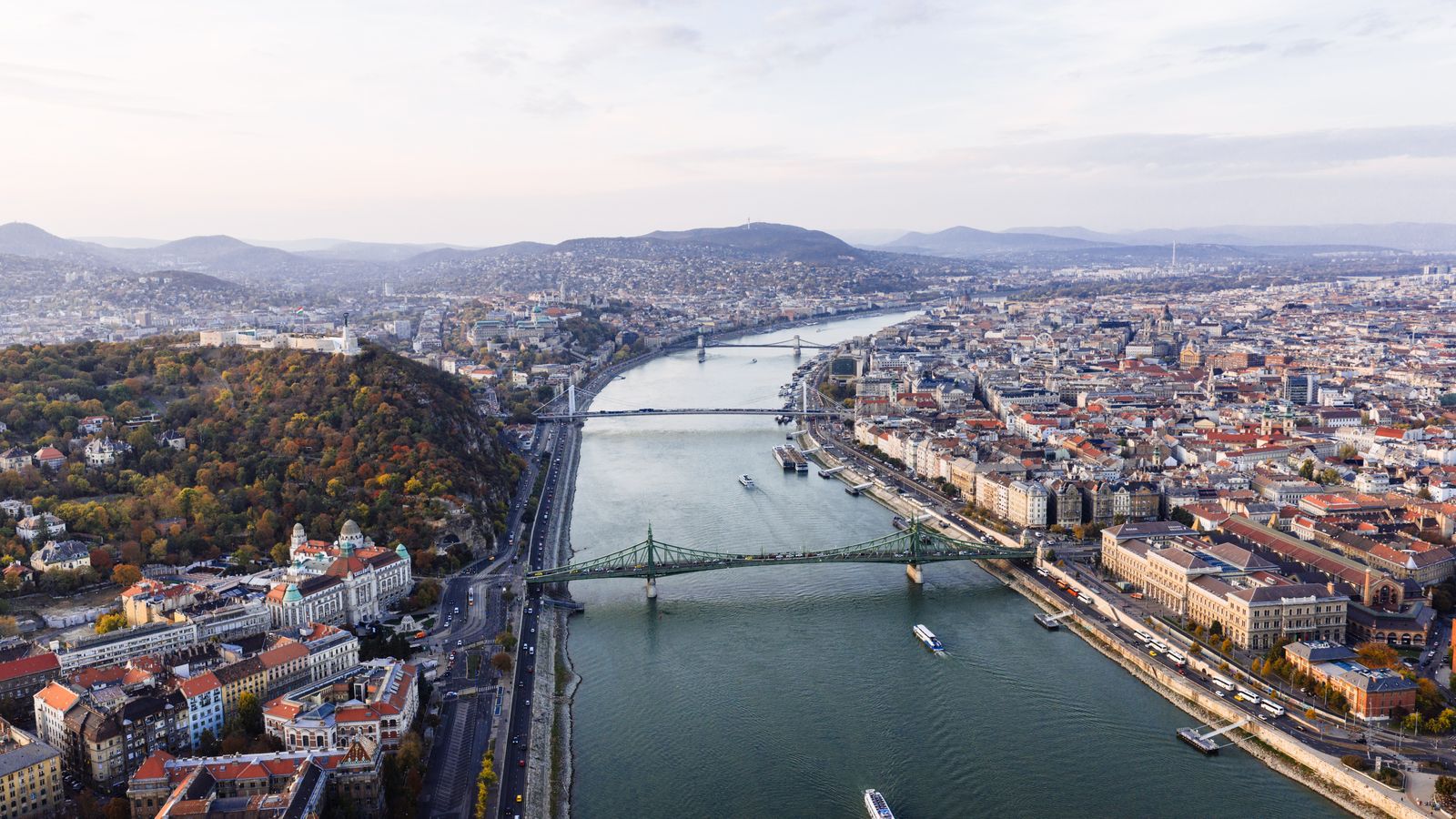
Budapest is one of the best-value capital cities in Europe, which is a big reason remote workers, students, and retirees are drawn to it. A comfortable life here costs far less than in London, Vienna, or Berlin, even though prices have climbed in recent years. This guide breaks down what you will actually spend each month in 2026, with real prices, sample budgets for different situations, and a look at which districts cost what.
The short answer: a single person can live comfortably on roughly €1,100 to €1,500 a month including central rent, while a couple typically needs €1,600 to €2,200. You can live on noticeably less further out, or as a student.
Rent in Budapest
Rent is by far your biggest cost, and it swings a lot with the size of the flat and the district. These are typical 2026 monthly rents, shown in forint with a euro guide.
| Apartment | Typical monthly rent | Average |
|---|---|---|
| Studio | 140,000 to 260,000 HUF (€355 to €660) | ~€480 |
| One-bedroom | 180,000 to 380,000 HUF (€460 to €970) | ~€660 |
| Two-bedroom | 260,000 to 520,000 HUF (€660 to €1,330) | ~€920 |
On top of rent, most flats charge a monthly building fee (közös költség) of roughly 20,000 to 60,000 HUF (€50 to €150) for shared maintenance, and sometimes water or heating. Always ask what is included before you sign. If you are thinking of buying instead, the median price is around 1.4 million HUF per square metre (about €3,600), rising to 1.9 to 2.6 million in the Buda hills and downtown, and dropping to roughly 1 million in outer Pest districts.
Utilities, internet, and mobile
- Utilities (electricity, gas or heating, water) for a small flat run €80 to €150 a month, higher in winter because of heating.
- Home internet is around €15 a month.
- A mobile plan is roughly €10 to €15 a month.
Groceries and eating out
Food is where Budapest really feels cheap, eating out most of all. Some everyday 2026 prices:
| Item | Price |
|---|---|
| Milk (1 litre) | ~400 HUF (€1) |
| Fresh bread (500g) | ~560 HUF (€1.40) |
| Eggs (12) | ~1,000 HUF (€2.50) |
| Chicken breast (1kg) | ~2,000 HUF (€5) |
| Cappuccino | ~930 HUF (€2.40) |
| Local draught beer (0.5L) | ~970 HUF (€2.50) |
| Meal at an inexpensive restaurant | ~€10 |
| Three-course dinner for two, mid-range | ~20,000 HUF (€50) |
Groceries for one person come to around €250 a month if you mostly cook at home, and the city’s markets such as the Great Market Hall, along with discount chains like Aldi, Lidl, and Spar, keep that down.
Getting around
- A monthly transport pass is about 8,950 HUF (€23) and covers buses, trams, the metro, trolleybuses, and suburban rail across the city.
- A single ticket is around 450 HUF (€1.15).
- Taxis start at about 1,200 HUF (€3) plus roughly 480 HUF (€1.25) per kilometre.
- Petrol is around €1.50 a litre, among the cheaper in the EU, though many residents skip a car because public transport is so good.
Healthcare
If you work and pay social contributions, you are covered by the public system through a TAJ card. Many newcomers also take out private health insurance or simply pay for private clinics, which are well-equipped and still affordable by Western standards. If you are not yet in the public system, budget for private cover from the start.
Gyms, leisure, and the rest
- Gym membership: €29 to €61 a month.
- Entry to a public pool or one of the famous thermal baths: around €4 to €5 for a local pool, more for the big spas like Széchenyi.
- A cinema ticket: around €7.
Sample monthly budgets
Putting it together, here is roughly what different people spend per month, rent included.
| Who | Typical monthly total |
|---|---|
| Student (room or shared flat, frugal) | €600 to €850 |
| Single professional (central one-bed) | €1,100 to €1,500 |
| Couple (sharing a one or two-bed) | €1,600 to €2,200 |
| Family with children (two or three-bed) | €2,200 to €3,200 |
Living a few districts out, cooking at home, and relying on public transport pushes you toward the lower end of each range.
Where to live, and what it costs
District choice drives your rent more than anything else. A quick orientation:
- Most expensive: District V (Belváros, the downtown core), District II (Rózsadomb and the leafy Buda hills), and District XII (Hegyvidék).
- Popular with expats, mid-priced: District VI (Terézváros), District VII (Erzsébetváros, the lively bar district), District IX (Ferencváros), and District XIII (Újlipótváros, clean and riverside).
- More affordable: outer parts of District VIII, District X (Kőbánya), District XIV, and District XXI (Csepel).
- Good for families: District XI (Újbuda), which balances green space, transport, and reasonable rents.
How Budapest compares to other cities
Against other European capitals, Budapest sits firmly in the affordable tier. Rough cost-of-living differences:
- About 50 percent cheaper than London.
- About 44 percent cheaper than Paris.
- About 36 percent cheaper than Berlin.
- About 29 percent cheaper than Vienna, its closest neighbour.
One thing to keep in mind: local salaries are lower too. The average net wage in Hungary is roughly €1,000 to €1,200 a month, so the city feels especially affordable if you earn from abroad or work remotely.
Tips to keep costs down
- Rent a district or two out from the centre. Transport is fast and cheap, so you lose little.
- Cook with market and discount-store groceries. Eating out is cheap, but it adds up daily.
- Buy the monthly transport pass rather than single tickets.
- Check whether the building fee and utilities are included before signing a lease.
- Pay in forint and watch the exchange rate. Budgeting with some headroom protects you from currency swings.
Planning a move? Our residence permit finder helps you work out which permit fits your situation.
Frequently asked questions
How much does it cost to live in Budapest per month?
A single person can live comfortably on about 1,100 to 1,500 euros a month including central rent, and a couple on roughly 1,600 to 2,200 euros. Students and people living further out can spend noticeably less.
How much is rent in Budapest?
Typical 2026 rents are about 355 to 660 euros for a studio, 460 to 970 euros for a one-bedroom, and 660 to 1,330 euros for a two-bedroom, depending on the district. Most flats also charge a separate building fee of 50 to 150 euros.
Is Budapest cheaper than Western Europe?
Yes, noticeably. Living costs are roughly 50 percent below London, 44 percent below Paris, 36 percent below Berlin, and 29 percent below Vienna, which is a big part of the city’s appeal.
What are the cheapest districts in Budapest?
The more affordable areas include outer District VIII, District X (Kobanya), District XIV, and District XXI (Csepel). The priciest are District V downtown and the Buda hills in Districts II and XII.
How much is public transport in Budapest?
A monthly pass is about 8,950 HUF (around 23 euros) for unlimited travel on buses, trams, the metro, trolleybuses, and suburban rail within the city. A single ticket is around 450 HUF.
Is Budapest cheap if I earn in euros or dollars?
Very. Costs sit well below Western Europe while everything is priced in forint, so income earned abroad or remotely stretches a long way here.